The 2026 Conference Program is defined by primary topics. Therefore, each session has a primary topic designation for attendees to quickly find those sessions of relevance and importance to them. Sessions are also classified by both Target Level (Beginner, Intermediate, Advanced or All) and Target Audience (Corporate/Private Sector, Government, Investigators, Law Enforcement/Police, Prosecutors/Attorneys/Legal).
To sort by topics, audience, and levels to find the program that best suits your needs, click on Filters.
For a list of all sessions by day, please click on the day/date link.
Note - classifications are simply a guide to help attendees select the best sessions for individual needs/experience, and by no means should exclude or deter anyone from attending a session of interest.
Artificial intelligence is fundamentally changing the nature of digital evidence and with it, the future of modern investigations. From AI-generated content and deepfakes to synthetic identities, auto …
Investigators are required to process vast amounts of data including forensic artifacts, logs, open-source intelligence, multimedia content, and other data sources. Agentic AI introduces a new paradig …
The case study follows a child exploitation investigation from a mother's discovery of explicit messages to a 22.5-year federal conviction. Attendees will learn how digital forensics, mobile device ex …
While Griffeye is widely known for its role in child exploitation investigations, its capabilities extend far beyond a single investigative discipline. Wherever investigators are faced with large volu …
Vehicles play a role in many investigations, from homicides to narcotics and traffic crimes, yet their digital evidence is often underused. This session will fill that gap shows how data from vehicle …
This session explores how Generative AI is transforming legal work from early case assessment and investigations to depositions, hearings, arbitrations, and trial preparation. Discover how AI can acce …
As AI-generated content, synthetic media, and sensor spoofing become increasingly sophisticated, determining whether information is authentic has become a growing challenge. This session explores the …
This session will share how San Diego’s Elder Justice Task Force (EJTF) is leading the nation in the fight against elder scams by arresting and prosecuting members of money laundering organizations op …
See how ADF helps investigators quickly identify, collect, and review relevant evidence from mobile devices and computers—without waiting for a full forensic examination. This live demo will cover tar …
Mobile device triage offers a sustainable alternative to full extraction as encrypted devices, rising data volumes, and limited staffing strain investigations. This session shows how targeted assessme …
Red Room Exchange examines a case study involving a dark marketplace used as a human exploitation brokerage site. This session shows how digital patterns, usernames, emails, phone numbers, leaked data …
Digital investigators face unprecedented volumes of data, increasing case complexity, and growing pressure to deliver timely results. While advances in forensic technology continue to improve data col …
What if an attacker could deploy an entire operating environment instead of relying solely on malware or remote access tools? This session explores "Ghost Machines" lightweight, disposable virtual mac …
As a digital forensic investigator, you deserve the best tools that are suited for your job. Here at Silicon Forensics, we want to help you design the perfect system tailored to your workflow. This se …
Artificial intelligence is rapidly changing how digital evidence is analyzed but how should it be used responsibly within the forensic video analysis community? This session examines when analysts can …
Digital forensics, incident response, and eDiscovery teams need reliable agentic AI beyond hype and demos. This session covers real systems engineering approaches for production pipelines. During this …
The session focuses on the development of an all-civilian digital evidence team within the police department to support investigations. Attendees will understand how social media platforms, mobile dev …
The critical initial hour at a search and seizure scene involving digital devices in ICAC and human trafficking investigations. Focus is on the identification, preservation, and rapid triage of digita …
Vehicle data has become valuable evidence in nearly every type of investigation. Vehicle data can provide investigators evidence of where the vehicle has been, how it was driven, how fast it was going …
Abstract Proposal: Cellular records are a cornerstone of modern investigations, but their value depends on proper use, analysis, and clear presentation. This session covers how call detail records and …
North Korea-linked financial cybercrime is now a revenue operation, not a single hack. Drawing on sanitized 2024-2025 cases and Korean-language human intelligence, this session follows the trail from …
For over a generation, our lives have become increasingly digitized. While corporations’ information to drive revenue, the same digital trail provides law enforcement and prosecutors with new forms of …
AI can surface a lead in seconds, but a fast answer you can't adequately verify is not a finding. It's a lead at best. This session covers how to verify AI-assisted forensic work responsibly: connecti …
Cybercrime, fraud, human trafficking, narcotics distribution, intellectual property theft, and data breaches increasingly intersect with the Dark Web. This session will provide civil and criminal inve …
Through a lead provided by a private sector human risk management and managed intelligence company, Agents with the San Diego FBI opened an investigation into a cyber-enabled fraud scheme facilitated …
Mission Darkness is bringing an interactive, hands-on demonstration of Faraday technology and digital forensics and everyone involved in collecting, handling, or examining digital evidence is invited. …
Vehicle data has become valuable evidence in nearly every type of investigation. Vehicle data can provide investigators evidence of where the vehicle has been, how it was driven, how fast it was going …
This session demonstrates how investigators can leverage Open-Source Intelligence (OSINT) methodologies, combined with generative AI tools such as ChatGPT, to build a structured investigative framewor …
Digital investigations are evolving faster than most traditional forensic tooling can adapt. This session will explore why modern investigators benefit from adopting developer-style tools-including SQ …
This session takes an in-depth look into the investigation of TD Bank. Agents will discuss where it started, typologies the bank failed to catch, and AML areas that were the bank was criminally non-co …
This presentation will demonstrate features and capabilities of both Amped Replay and Amped FIVE for digital image and video triage, analysis, and enhancement. It will also highlight how both solution …
This session walks through the lifecycle of a digital forensic investigation from authorization and scoping through analysis, reporting, presentation, and testimony using the Digital Forensics Referen …
Modern attackers often hide in plain sight by abusing trusted tools already on compromised systems, including PowerShell, WMI, scheduled tasks, RDP, and other built-in utilities. This session breaks d …
As artificial intelligence becomes increasingly integrated into legal workflows and dispute resolution, one of the industry's most important questions is whether we can trust the evidence it receives. …
Discover how the Detego Unified Digital Forensics Platform enables investigators to streamline manual workloads, accelerate investigative processes, and get to critical evidence faster, from initial a …
Behind the Screen examines a case study involving real responses from convicted child sexual offenders describing their online behavior, grooming, boundary testing, rationalization, concealment, and e …
Early decisions shape child‑exploitation cases long before devices reach the lab. This session shows how modern forensic tools help identify offenders, locate victims, build probable cause, and guide …
As users increasingly turn to AI platforms such as ChatGPT, Gemini, Claude, and Llama instead of traditional search engines, prompt-driven interactions are becoming a valuable source of digital eviden …
This session directly addresses one of the most critical challenges in the field - the significant disparity between investigative needs and available resources. The session will discuss how research …
Abstract Proposal: Organizations remain investigation-unready because Compliance, Legal, IT, Forensics, and eDiscovery work in fragments, treating chain of custody as a technical task instead of a sha …
The days of "Trust me, I'm an expert" are long gone and digital forensic artifacts are being challenged in the courtroom. Verifying artifacts are an essential part of the investigative and courtroom p …
This session will cover emerging criminal trends effectuated and enabled by artificial intelligence. Attendees will learn about the latest AI crimes; How to protect against these crimes and evidentiar …
This session will walk through a combination of complex investigations involving organized burglary crews. The session will highlight some of the technological investigative techniques, including Towe …
Most people think once a device is collected, the evidence is immediately available. That is not always the case. Collection and processing are two very different phases of forensic investigation and …
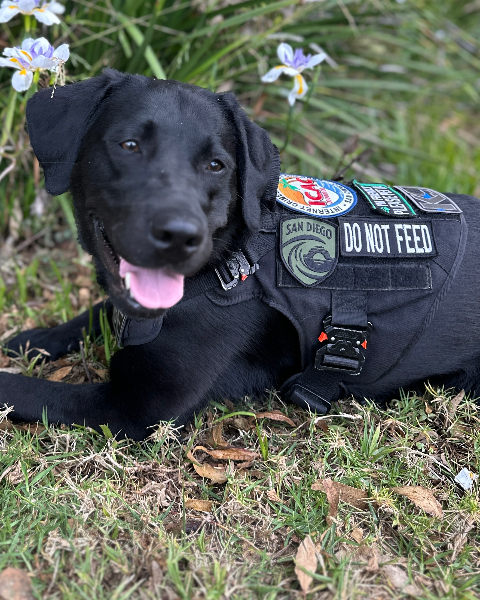
Join Officer Amber Banning and ESD K9 Phoebe of the San Diego Police Department and ICAC Task Force for a demonstration and Q&A session. Learn how ESD K9s are specially trained to detect electronic st …
Modern traffickers use technology to recruit, control, and profit from their victims, leaving behind a digital footprint that can tell the story when victims cannot. This session gives prosecutors the …
Digital forensics starts with a device, but getting the data and analyzing the data is the true goal. This session introduces examiners to MSAB's XRY and XAMN, walking through how the two tools work t …
This session will be an overview of acquiring data from macOS devices with Fuji a free, open-source program. Developed by Andrea Lazzarotto, Fuji is a program for performing forensic acquisition of Ma …
This session shares observations from an experiment using agentic AI in a mobile forensic case involving a timestamp interpretation issue. It examined whether an AI agent would simply trust parsed for …
The Dark Web contains a wealth of potential evidence but collecting that evidence in a manner that is reliable, defensible, and admissible presents unique challenges. This session explores the practic …
The landscape of civil litigation eDiscovery is evolving rapidly. This session explores the latest developments shaping modern eDiscovery practice, including emerging data types, modern attachment for …
When it comes to child safety, accessing pertinent information quickly is of paramount importance. In an era of information overload, thanks to AI, data is only expected to increase here on. This sess …
Jump lists and link files: cool user activity artifacts, but how do we actually incorporate them into our investigations? Let's dive into jump lists & link files—what they are, the latest research, pr …
Child exploitation investigations no longer begin and end with a smartphone. Evidence now exists across cloud accounts, messaging platforms, gaming services, wearables, smart devices, and connected ec …
Too often, digital evidence is compromised because of improper collection, preservation, management, or analysis. In many cases, the first personnel to respond to an incident lack the training needed …
As AI-generated content, synthetic media, and sensor spoofing become increasingly sophisticated, determining whether information is authentic has become a growing challenge. This session explores the …
Phone records and mobile device extractions provide valuable investigative data, but they cannot pinpoint a user's exact location. This session explores how Forensic Radio Frequency Propagation Survey …

)



.jpg)


.jpeg.jpg)















.jpg)